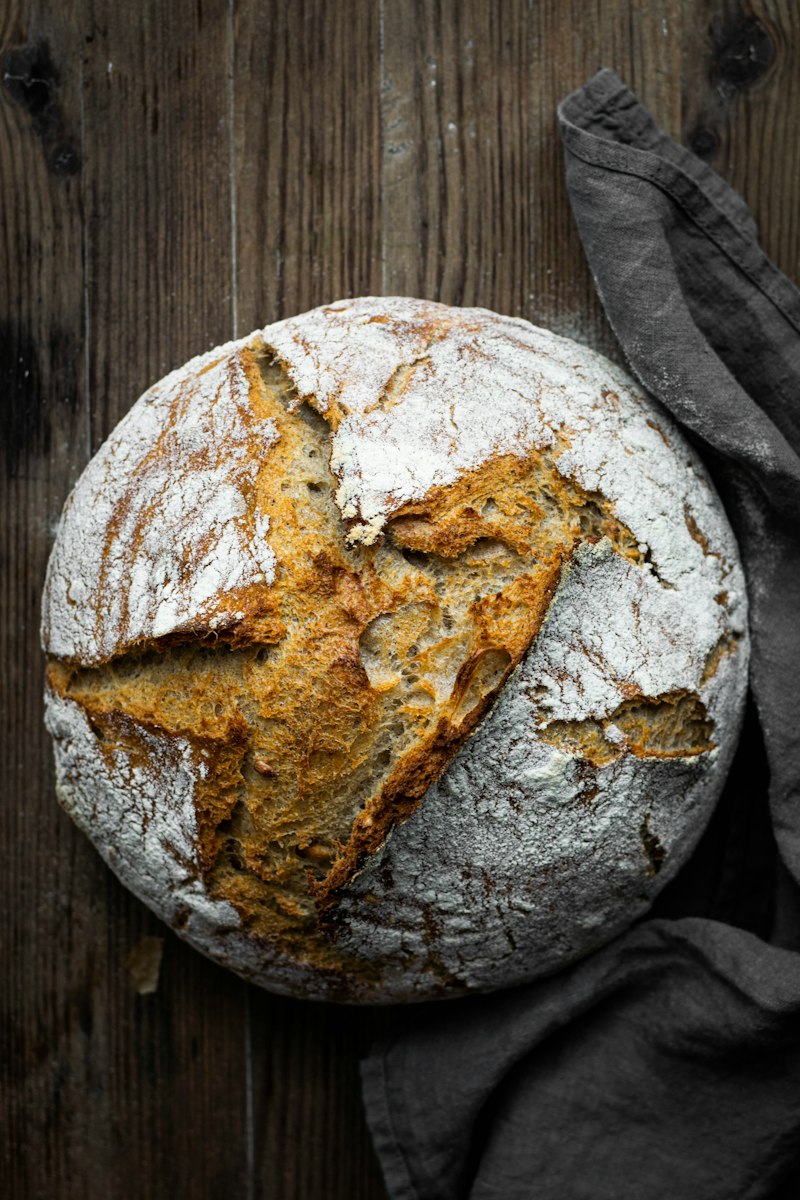
Bakers frequently equate high hydration with sourdough mastery, but water flour ratios cannot be evaluated in isolation from flour protein quality and ash content. In this technical breakdown, we examine how varying hydration between 68% and 82% transforms dough rheology and crumb structure.
1. Gluten Network Extensibility vs Tenacity
At 68% hydration, dough exhibits high tenacity. Glutenin polymers form dense intermolecular disulfide bonds, allowing the dough to maintain high vertical oven spring. However, gas cell expansion is restricted, yielding a tight, sandwich-ready crumb. Increasing hydration to 78-82% plasticizes the gluten matrix, shifting the balance toward extensibility. Gliadin proteins slide more freely, allowing carbon dioxide bubbles to inflate without premature cell wall rupture.
| Hydration (%) | Gluten Behavior | Fermentation Velocity | Recommended Flour Ash |
|---|---|---|---|
| 68% - 72% | High tenacity, low stickiness, structured shape | Standard (4-5 hour bulk at 76°F) | 0.55% (Standard unbleached white) |
| 78% - 82% | High extensibility, requires coil folds, slack dough | Accelerated enzymatic breakdown | 0.68% - 0.85% (High extraction or whole wheat) |
2. Enzymatic Proteolysis and Amylase Activity
Water acts as a mobility medium for alpha and beta-amylase enzymes. In an 80% hydration dough, amylase hydrolyzes damaged starches into maltose at an accelerated rate, fueling Saccharomyces cerevisiae and Lactobacillus sanfranciscensis metabolism. However, excessive free water allows endogenous protease enzymes to degrade the gluten backbone if bulk fermentation exceeds 5 hours at temperatures above 78°F. Coil folding every 45 minutes during the initial 3 hours is essential to realign stretched gluten fibrils.